
Walnut blasting removes carbon from N54 intake valves and typically restores smoother idle and better midrange throttle response when performed with proper vacuum and blast tooling. Most owners can do it in a garage with the intake manifold off, though tight cylinder #6 access trips up first timers. BMW documents the procedure and its own Carbon Blaster tool in factory service information, and following that guidance closely is what separates a clean job from a costly mistake.
TL;DR:
- Proper vacuum setup is critical to prevent media ingestion and avoid damaging the engine during walnut blasting.
- The cleaning process typically takes a half day, with short bursts and careful rotation of cylinders to ensure thorough removal of carbon buildup.
- The procedure is most effective when combined with installation of new gaskets, proper torque, and aftercare like a catch can and regular oil changes.
- Costs for a professional job are several hundred dollars, but DIY kits and media are significantly cheaper and reusable for future maintenance.
- Regular walnut blasting around 70,000 miles, paired with good oil maintenance, helps maintain smoother idle and midrange power in the long term.
Table of Contents
- What Walnut Blasting Does and Why the N54 Needs It
- Tools, Materials, and Preparations
- How Do You Walnut Blast an N54 Step by Step?
- Can Walnut Blasting Damage an Engine?
- What Does It Cost and How Long Do the Results Last?
- Aftercare, Gaskets, and Preventing the Next Buildup
- Why Trust This N54 Walnut Blasting Guide
- The Editorial Take: What Actually Matters Here
- How e9x Performance Parts Supports Your N54 Project
- Sources
- FAQ
What Walnut Blasting Does and Why the N54 Needs It
The N54 injects fuel directly into the cylinder instead of spraying it across the intake valves first. That design makes the 335i, 135i, and every other N54 application more efficient and more powerful than a comparable port-injected engine, but it removes the one thing that used to keep intake valves clean: gasoline washing over them on every intake stroke.
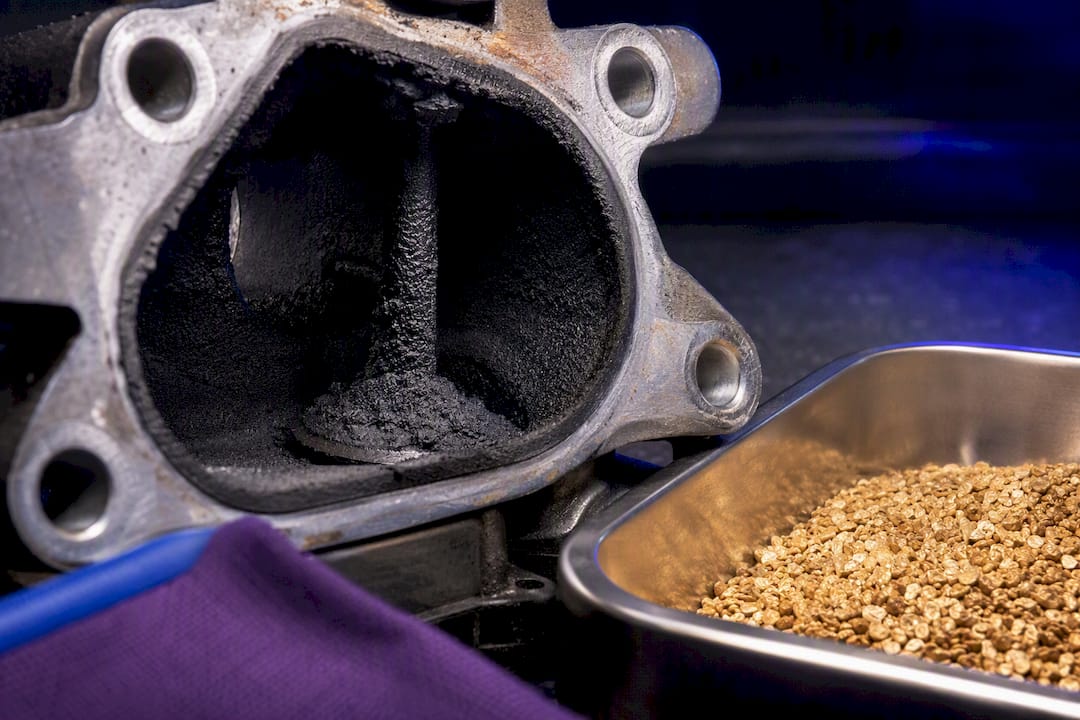
Without that wash, oil vapor from the PCV system lands on the back of hot intake valves and bakes into a hard, dry carbon crust. Over tens of thousands of miles, that crust narrows the valve opening and disrupts airflow into the cylinder. The result feels like a slow leak in engine performance: a lumpy idle, a hesitation off the line, a cold start that stumbles before settling, and a flat spot in the midrange where the engine used to pull cleanly.
Walnut blasting media, crushed walnut shells fired through compressed air, is abrasive enough to knock that carbon loose without scarring the valve face or the cylinder head, unlike sand or glass bead media that can pit softer metals. It's the same principle used to strip paint off delicate surfaces: aggressive enough to work, soft enough not to damage what's underneath. BMW takes this seriously enough to have engineered an OEM procedure and dedicated tool around it rather than leaving cleaning entirely to aftermarket shops.
Tools, Materials, and Preparations
Before you pull the intake manifold, get every consumable and tool staged. Running out of media or gaskets mid-job on a partially disassembled N54 is how a Saturday afternoon turns into a week with the car apart.
Core equipment you'll need:
- A walnut blaster gun (pneumatic, siphon-fed) rated for automotive carbon cleaning
- A shop vacuum with a hose adapter sized to seal against the intake ports
- Walnut shell media in 20/30 SAE grade, roughly 0.45 to 0.80 millimeters, matching what BMW's own service information specifies
- A compressed air source capable of 6 to 8 bar (87 to 116 PSI) to drive the blaster properly
- A full set of intake manifold gaskets, six pieces, one per cylinder
Consumables and protective gear:
- Respirator rated for fine particulates, since walnut dust and old carbon debris both irritate lungs
- Safety glasses or a full face shield
- Shop rags and painter's tape to mask off wiring connectors and sensors
- Solvent wipes or brake cleaner for final valve inspection
BMW's factory procedure references the Carbon Blaster tool, part number 81 29 2 208 034, along with a labor allowance that includes a sublet cost for bulk walnut shells, roughly $25 in OEM documentation. Aftermarket blaster kits built to the same media spec work fine, and most DIYers use one instead of buying the dealer tool outright.
Pro Tip: Buy more media than you think you need. Running short mid-blast on cylinder #6 means stopping, cleaning up, and refilling with the manifold still off, which is the worst possible time to realize you're low.
How Do You Walnut Blast an N54 Step by Step?
This is a half-day job for most owners with the intake off and the shop already set up. Rushing the vacuum setup is the single most common mistake, so read that part twice before you start.
1. Remove the intake manifold and expose the valves
Disconnect the battery, drain any coolant lines that route near the manifold, and remove the intake manifold following the standard N54 procedure. This exposes all six intake ports and the valves sitting behind them. Mask off any open electrical connectors and coolant ports with tape so debris and media can't migrate into places you'll regret later.
2. Rotate the engine to close each valve in sequence
You only want to blast a valve while it's closed, otherwise media falls straight into the cylinder. Use a socket on the crank pulley to rotate the engine by hand, watching each intake valve as it closes fully. Work through cylinders in firing order, closing one valve at a time before you blast it.
3. Set up vacuum before you touch the trigger
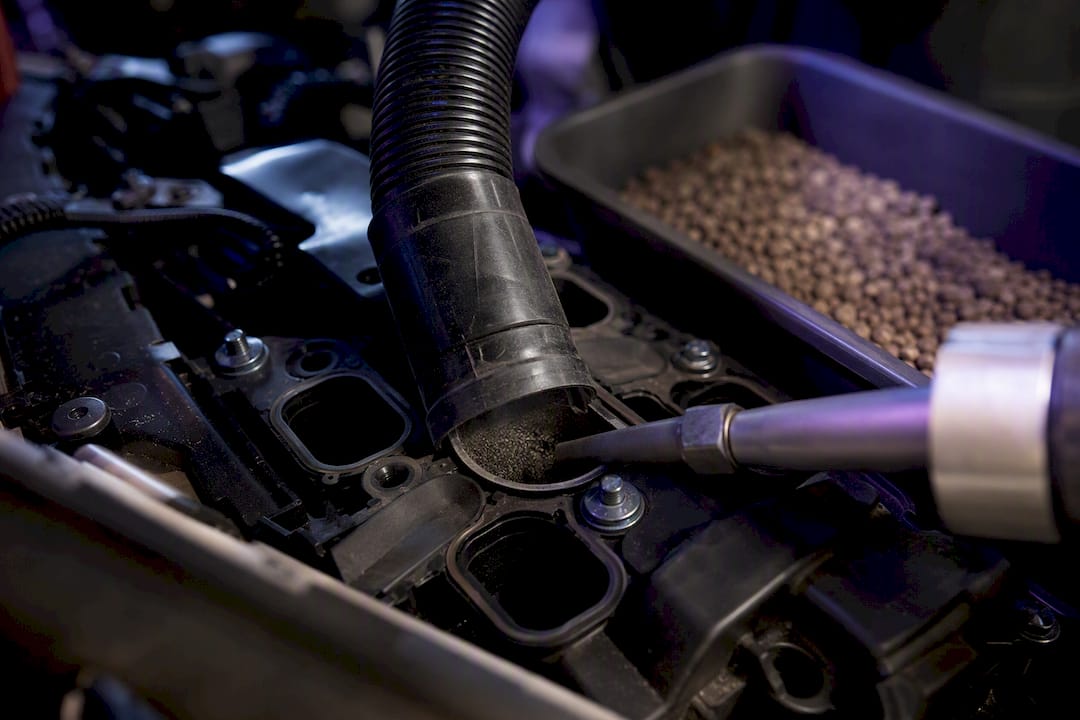
This is the step that protects your engine. Seat a shop vacuum hose directly over the intake port you're working, sealed tight enough that it pulls dislodged carbon and spent media out rather than letting it drop into the port. DIY walk-throughs consistently emphasize this vacuum-first choreography: the vacuum runs continuously, and the blaster only fires into a port that's already under negative pressure.
4. Blast in short bursts, not a continuous stream
Fire the blaster in one to two second intervals, pausing between bursts to let the vacuum clear debris. A continuous stream tends to load the port with more shell fragments than the vacuum can keep up with. Most valves need somewhere between 30 seconds and two minutes of cumulative blast time before the carbon visibly lifts, checked with a flashlight and inspection mirror between bursts.
5. Handle cylinder #6 with extra patience
Cylinder #6 sits at the back of the engine bay against the firewall, and reaching it with a blaster nozzle and a vacuum hose at the same time is genuinely awkward on the E9x chassis. Angle the blaster nozzle from whatever side gives you clearance, even if it means working at an uncomfortable wrist angle, and take it slower than the other five ports.
6. Purge and inspect every port after blasting
Once a valve looks clean, hit the port with compressed air to knock loose any remaining shell fragments, then run the vacuum over it again to catch what the air dislodged. Wipe the valve face with a solvent rag on a long pick or brush, and do a final visual check with a flashlight before moving to the next cylinder.
7. Reassemble with new gaskets, torqued in sequence
Once all six valves are clean and every port has been double checked for stray media, install a fresh set of intake manifold gaskets rather than reusing the old ones. Torque the manifold bolts in the pattern specified for your engine, working from the center outward, then reconnect everything you taped off earlier.
Pro Tip: Keep a small magnetic parts tray next to the engine bay. Walnut shell fragments and old bolts look nothing alike, but at 11 PM under a shop light, everything starts to blend together.
Can Walnut Blasting Damage an Engine?
Done carelessly, yes. The main risks aren't exotic, they're procedural, and every one of them comes down to controlling where the media goes.
- Media ingestion: a shell fragment or dislodged carbon chunk that drops past an open valve into the cylinder can score the cylinder wall or damage a piston.
- Dislodged carbon debris: carbon flakes that break off but aren't captured by the vacuum can settle in the intake tract and get pulled in later.
- Inhalation exposure: fine walnut dust and old carbon particulate are unpleasant to breathe for hours at a time without a respirator.
None of these are unusual outcomes when the vacuum setup is weak or the blast intervals run too long. Community writeups note that a shop vacuum needs enough suction to hold a firm seal against the port opening, not just sit near it, and that unused ports on adjacent cylinders should stay covered while you work. Confirm the job is actually done with three checks: a visual inspection with a flashlight, a compressed air purge that produces no further debris, and a final vacuum pass that comes up clean. If a valve still shows heavy coking after several blast cycles, or if you're not confident the vacuum sealed properly during a pass, stop and have a shop finish that cylinder rather than guessing.
What Does It Cost and How Long Do the Results Last?
A shop-performed walnut blast on an N54 typically runs several hundred dollars in labor, more if the shop also replaces the intake manifold gaskets and any coolant lines disturbed during removal. Doing it yourself cuts that down substantially since the blaster, media, and gasket set are one-time or low-cost purchases you can reuse or restock cheaply for future services.
Costs climb when access is tight or gaskets tear during removal, since a partially seized bolt or a brittle old seal turns a routine removal into an unplanned parts run. Documented before-and-after cases back up the payoff: one shop-recorded example showed roughly 18 whp and 13 wtq gained purely from cleaning coked valves, alongside a smoother idle and the disappearance of a cold-start stumble.
- Idle quality: rough or hunting idle usually smooths out immediately after a thorough blast
- Midrange power: the flat spot many owners describe in the 3,000 to 4,500 RPM range often fills back in
- Longevity: community guidance points to an initial service around 70,000 to 75,000 miles, with the interval afterward depending heavily on oil-change habits and PCV condition
If symptoms persist after a clean blast and a proper post-job leak check, the issue likely sits elsewhere, in the fuel injectors, ignition coils, or a vacuum leak the cleaning didn't touch.
Aftercare, Gaskets, and Preventing the Next Buildup
The blast itself is only half the job. What you do in the hour after reassembly determines whether the repair holds.
- Install new intake manifold gaskets, all six, and skip reusing the old set even if they look intact, since a hardened gasket rarely reseals properly and a vacuum leak will erase any gains you just made.
- Torque the manifold bolts in the specified pattern, then run a smoke test or listen for a hiss at idle to catch any leak before you drive it.
- Take it on a short road test, log any fault codes that pop up, and clear them once you've confirmed the car runs clean.
On the prevention side, a catch can slows down how much oil vapor reaches the intake valves, though a single can rarely captures all of the blow-by coming from both the high and low side of the crankcase, so don't expect it to eliminate buildup entirely. Pairing a catch can with disciplined oil-change intervals does more for long-term valve cleanliness than either measure alone. Keep a simple maintenance log, mileage at time of service, symptoms before and after, and revisit the valves on a mileage-based schedule rather than waiting for symptoms to return.
Pro Tip: Write the blast date and mileage on a sticker inside the engine bay near the intake. It's a five-second reference the next time you or a shop needs to know how long it's been.
Why Trust This N54 Walnut Blasting Guide
This guide follows BMW's own Carbon Blaster service procedure rather than a generic aftermarket process, which matters on an engine as sensitive to induction changes as the N54. The technical content is built around what actually works on these platforms, drawing on hands-on familiarity with N54 and E9x maintenance patterns rather than repackaging generic engine advice.
The approach centers on parts that owners have put into real cars, not just spec sheets, and technical support fields the kind of specific questions—gasket fitment, torque sequences, cylinder #6 access—that come up mid-job rather than in a showroom. That combination of documented OEM procedure and shop-level familiarity with the N54's quirks is what this guide is built on.
The Editorial Take: What Actually Matters Here
Most walnut blasting content treats it as a one-time fix, a service you do once and forget. That framing undersells the real lesson: walnut blasting treats a symptom of the N54's direct-injection design, not the cause. The valves will coke again, because nothing about the fuel delivery changed. The owners who get the most lasting value aren't the ones who blast most aggressively, they're the ones who pair the cleaning with a catch can and consistent oil changes afterward.
The conventional advice also underplays vacuum setup, treating it as a footnote when it's the single variable most likely to turn a routine cleaning into an expensive mistake. A weak seal or an impatient blast interval is where things go wrong, not the blasting itself. If you're doing this yourself, spend your caution budget on the vacuum choreography and the gasket replacement, not on second-guessing whether walnut blasting is the right call. The OEM procedure and the documented results both say it is.
— lesley
How e9x Performance Parts Supports Your N54 Project
Once the valves are clean, the parts that go back on matter as much as the cleaning did. Intake gaskets, sport exhaust systems, and airflow components are sourced and tested with real BMW builds in mind, so you're not guessing whether a part fits your engine bay.
If your project extends beyond the intake, browse sport systems like the 120d and 123d Sportsystem, or the E60 and E61 Sportsystem and its companion variant, each tested against real BMW applications rather than sold on spec sheets alone. For readers planning intake work beyond valve cleaning, the N52 vs N54 intake and exhaust guide breaks down what's compatible before you buy anything new.
Whether you're sourcing a gasket set for this exact job or planning your next upgrade, reach out to technical support with your specific engine and chassis details, and check the current catalog before you order anything for the reassembly.
Sources
- BMW Group Carbon Blaster N54 (Service Information PDF)
- How To Walnut Blast Intake Valves on BMW 335i! (DIY) - BMW 335i (N54)
- Walnut Blasting BMW Before and After | MAPerformance
- How To Clean The N54 Intake Valves - BMWBlog
FAQ
How Much Does It Cost to Walnut Blast an N54 Engine?
Shop labor typically runs several hundred dollars, more if gaskets or coolant lines need replacing during manifold removal. A DIY blaster kit, media, and a gasket set cost far less upfront and can be reused for future services.
What Are the Benefits of Walnut Blasting an N54 Engine?
Owners typically see a smoother idle, the disappearance of a cold-start stumble, and restored midrange power, with one documented shop example showing roughly 18 whp and 13 wtq gained after cleaning.
Can Walnut Blasting Damage an Engine?
Yes, if media or dislodged carbon isn't captured by a strong vacuum seal, fragments can drop into the cylinder and cause scoring. Following the vacuum-first technique and short blast intervals largely eliminates that risk.
Is Walnut Blasting Worth It?
For an N54 showing rough idle, cold-start stumble, or a flat midrange, yes, it directly addresses the carbon buildup causing those symptoms and is backed by BMW's own service procedure. It's best paired with a catch can and regular oil changes afterward to slow the next round of buildup.